Why Do Electric Motors Fail? 5 Proven Causes Revealed
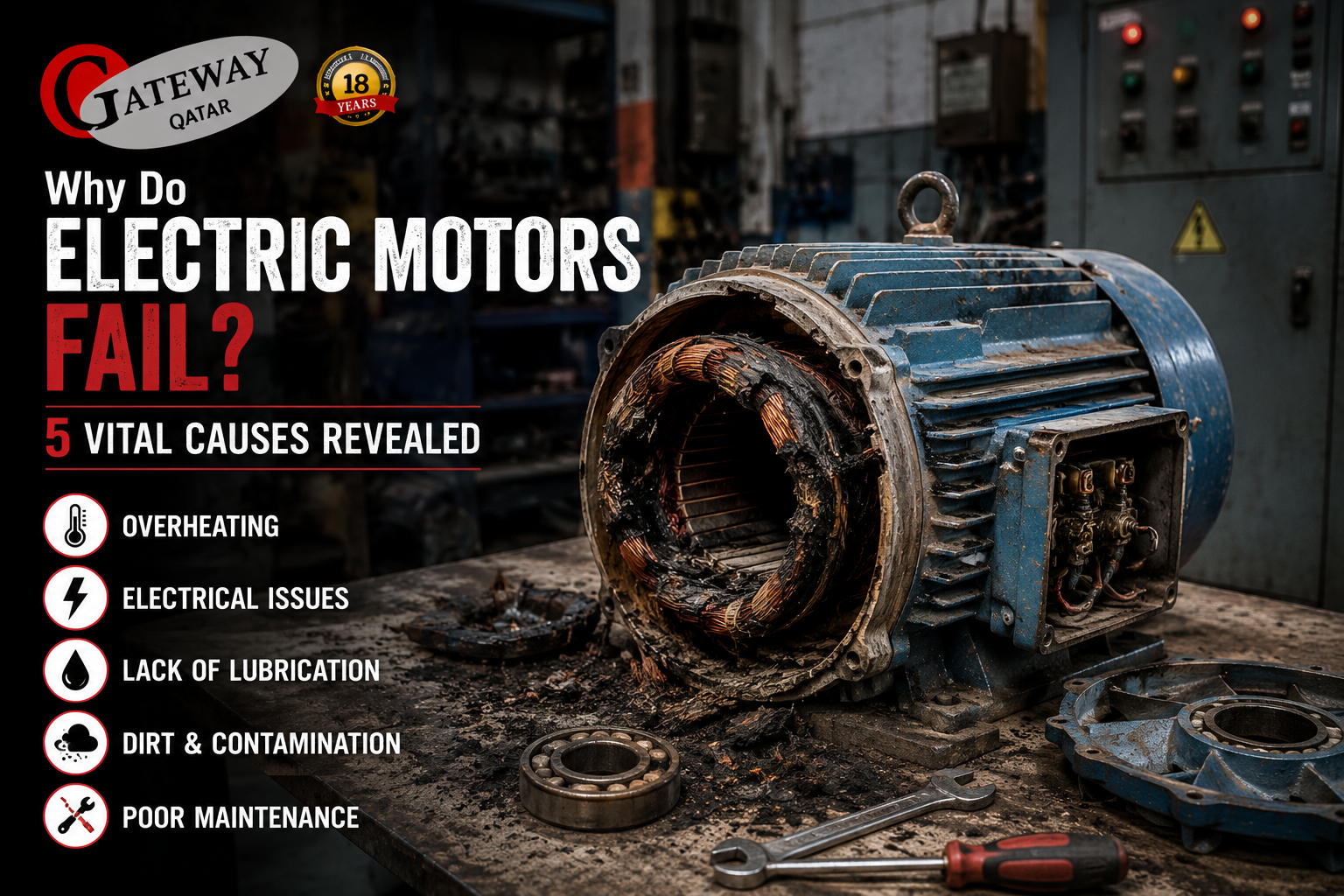
Why do electric motors fail? It is one of the most frequently asked questions by facility managers, maintenance engineers, and operations teams across every industrial, commercial, and building services sector — because electric motor failure is one of the most disruptive and costly events any facility can experience. Motors power HVAC systems, pump drives, compressors, conveyor systems, and hundreds of other critical applications, and when they fail unexpectedly, the operational and financial consequences are immediate and significant.
The answer to why do electric motors fail is rarely a single sudden event. In the vast majority of cases, motor failure is a progressive process driven by one or more identifiable root causes — causes that, when understood and addressed proactively, can be prevented or significantly delayed through correct maintenance, correct installation, and correct operating practices. Understanding why do electric motors fail is therefore the foundation of any effective predictive maintenance programme — giving facility managers and maintenance engineers the knowledge they need to intervene before failure occurs rather than simply reacting to it after the fact.
Gateway Technologies — the dedicated Motor Rewinding and Pump Repair Division of Gateway Qatar, providing professional motor rewinding and pump repair services across Doha and the whole of Qatar since 2004 — reveals the 5 most vital causes behind why do electric motors fail and what every maintenance team can do to prevent them.
Cause 1: Winding Insulation Breakdown — The Most Common Answer to Why Do Electric Motors Fail
The most frequent and fundamental answer to why do electric motors fail is the progressive breakdown of the electrical insulation that separates winding conductors inside the motor stator — a process that is gradual, largely invisible, and ultimately inevitable without proactive intervention.
Motor winding insulation is a varnish-impregnated material rated to a specific temperature class — Class F (155°C), Class H (180°C), or higher — that determines how much thermal stress the insulation can withstand before its molecular structure begins to degrade. The critical relationship governing why do electric motors fail due to insulation breakdown is the well-established Arrhenius rule of motor insulation ageing: insulation life approximately halves with every 10°C rise above the rated insulation temperature class.
In demanding environments like Doha, Qatar, and the wider Gulf region — where ambient temperatures regularly exceed 45°C, plant rooms can reach 55-60°C in summer, and motors run continuously year-round without the seasonal rest periods that allow insulation to recover — insulation degradation occurs at rates far exceeding what standard manufacturer service intervals anticipate. This specific environmental context is one of the most important local answers to why do electric motors fail more frequently in Qatar than manufacturer guidelines suggest.
The key accelerators of insulation breakdown that answer why do electric motors fail through this mechanism include thermal overload, moisture ingress from humid environments, chemical contamination, and the cumulative effect of vibration over extended operating periods. Regular insulation resistance testing using a megohmmeter is the most reliable way to monitor winding condition and identify early-stage insulation breakdown before it answers the question of why do electric motors fail the hard way — through complete winding burnout.
For a detailed guide on the warning signs that insulation breakdown is occurring before complete failure, read our overview on signs your electric motor needs rewinding — covering every indicator that maintenance teams should monitor as part of a proactive motor health programme.
Cause 2: Bearing Failure — A Mechanical Answer to Why Do Electric Motors Fail
The second most significant answer to why do electric motors fail is bearing failure — a mechanical rather than electrical failure mode that accounts for approximately 40-50% of all electric motor failures in industrial service. Motor bearings support the rotating shaft and maintain the precise air gap between rotor and stator that is essential for correct electromagnetic operation — and when bearings deteriorate, the consequences extend from simple noise and vibration through to catastrophic shaft seizure and stator winding damage from rotor contact.
Understanding why do electric motors fail through bearing deterioration requires recognising the key causes that drive bearing wear:
- Incorrect lubrication — the most common cause of bearing failure in motors that otherwise have sound windings and correct electrical supply. Over-lubrication, under-lubrication, use of incorrect grease specification, or mixing of incompatible lubricants all answer the question of why do electric motors fail through bearing damage in motors that could otherwise have operated reliably for many more years
- Vibration from misalignment — when motor shafts are misaligned with driven equipment couplings — pumps, fans, compressors — the resultant vibration and radial bearing loading accelerates bearing fatigue wear, providing a mechanical answer to why do electric motors fail that requires both bearing replacement and precision realignment to solve permanently
- Electrical fluting from variable frequency drives — motors operated via variable frequency drives can experience shaft currents that discharge through bearings, causing the characteristic fluting damage pattern seen on bearing races — an increasingly common answer to why do electric motors fail in modern industrial applications using VFD speed control
- Contamination from Qatar’s dusty environment — dust and sand particle ingress into motor bearings accelerates abrasive wear significantly in Qatar’s operating environment, providing a locally specific answer to why do electric motors fail through bearing deterioration more rapidly than in cleaner industrial environments
Cause 3: Overloading — An Operational Answer to Why Do Electric Motors Fail
The third answer to why do electric motors fail is overloading — operating the motor continuously beyond its rated current and power output, causing the motor to run hotter than its insulation class is designed to tolerate and progressively degrading the winding insulation through sustained thermal stress.
Overloading explains why do electric motors fail in several common scenarios:
- Undersized motor selection — when a motor is specified with insufficient power rating for the actual driven load, it operates continuously in overload — one of the most straightforward answers to why do electric motors fail prematurely in pump and fan drive applications where load calculations are sometimes underestimated during the design phase
- Process changes increasing driven load — in industrial applications, changes to the process — increased pump head, higher fan static pressure, heavier conveyor loads — can place previously adequate motors into continuous overload, explaining why do electric motors fail in applications where the motor has previously run reliably for years
- Blocked ventilation reducing cooling — a motor running at or near its rated current will overheat if its ventilation is blocked by accumulated dust — a very common scenario in Doha’s industrial facilities during sandstorm season, providing a preventable answer to why do electric motors fail through overtemperature in otherwise correctly loaded motors
Cause 4: Moisture and Contamination — An Environmental Answer to Why Do Electric Motors Fail
The fourth answer to why do electric motors fail is moisture and chemical contamination — environmental factors that attack motor winding insulation from the outside rather than through thermal degradation from within. This is a particularly relevant answer to why do electric motors fail in Qatar’s coastal areas, where high humidity, salt-laden air, and occasional water ingress create an aggressive environment for electrical insulation.
How moisture and contamination explain why do electric motors fail:
- Condensation on standby motors — motors that are run intermittently or kept on standby without regular operation can accumulate condensation on winding surfaces during Qatar’s humid nights, progressively absorbing moisture into the insulation and reducing insulation resistance. This answers why do electric motors fail shortly after being returned to service following an extended standby period
- Chemical attack from process environments — motors used in chemical processing, food production, or aggressive industrial environments can experience chemical attack on winding insulation from vapours and aerosols, explaining why do electric motors fail more rapidly in these sectors than in clean industrial applications
- Water ingress from wash-down operations — motors in food processing, pharmaceutical, or general industrial environments subjected to regular wash-down operations can experience direct water ingress if enclosure integrity is compromised, providing a clear environmental answer to why do electric motors fail in these specific applications
According to the American Society of Heating, Refrigerating and Air-Conditioning Engineers (ASHRAE), environmental factors including temperature, humidity, and contamination are among the most significant determinants of electric motor service life — directly confirming that environmental management is as important as correct electrical operation in answering why do electric motors fail and preventing it.
Cause 5: Power Supply Problems — An Electrical Answer to Why Do Electric Motors Fail
The fifth answer to why do electric motors fail is poor power supply quality — a category of electrical fault that is frequently overlooked in motor failure investigation because the problem disappears when the motor stops and cannot be observed after the fact without proper power quality monitoring equipment.
Power supply problems that answer why do electric motors fail include:
- Voltage imbalance between phases — in three-phase motors, even a small voltage imbalance between phases causes disproportionately large current imbalance, with the most heavily loaded phase carrying significantly more current than its rated value and therefore running significantly hotter than the motor’s thermal design anticipates. This is a very common and frequently unrecognised answer to why do electric motors fail in Qatar’s industrial areas where power supply quality can vary
- Voltage fluctuations and undervoltage — motors operated at voltages significantly below rated specification draw higher current to maintain torque, increasing winding temperature and accelerating insulation degradation — answering why do electric motors fail in areas with unstable power supply
- Harmonic distortion from VFDs and non-linear loads — harmonic currents in the power supply create additional heating in motor windings beyond what the fundamental frequency load current alone would generate, providing an increasingly common answer to why do electric motors fail as VFD usage grows in modern industrial applications
- Frequent starts without adequate recovery time — each motor start draws 5-7 times the rated running current for several seconds, generating a significant thermal pulse in the winding. Motors that are started too frequently without adequate time between starts accumulate thermal damage that cumulatively answers why do electric motors fail in applications with high start frequency
According to the Qatar Chamber of Commerce, engaging qualified electrical engineering contractors for motor maintenance and rewinding in Qatar is essential for identifying all root causes — including power supply quality issues — that explain why do electric motors fail and preventing recurrence after repair.
How Gateway Technologies Addresses Every Reason Why Do Electric Motors Fail
Understanding why do electric motors fail is the foundation of everything we do at Gateway Technologies. When a motor arrives at our workshop in Doha for rewinding or repair, our first priority is always accurate fault diagnosis — identifying not just what failed, but why do electric motors fail in that specific application and environment, so that the repaired motor returns to service with every contributing factor addressed rather than simply the visible damage rectified.
Our motor rewinding and repair process addresses every cause:
- Winding insulation failure — resolved through precision rewinding with quality-grade copper winding materials, correct temperature class insulation, and vacuum pressure impregnation varnishing
- Bearing failure — addressed through complete bearing replacement with correctly specified bearings and precision shaft alignment before return to service
- Overloading — identified through pre-repair assessment and communicated to the client with recommendations for load management or motor resizing
- Moisture and contamination — addressed through pre-winding drying, selection of appropriate insulation materials, and recommendation of improved motor enclosure or environmental controls
- Power supply problems — identified through electrical testing and communicated to the client with recommendations for power quality monitoring and correction
For more information on how our rewinding process restores motors affected by every one of these failure causes, read our comprehensive guides on motor rewinding service in Qatar and motor repair in Qatar.
Contact Gateway Technologies
Have a failed motor and need expert diagnosis of exactly why do electric motors fail in your specific application? Contact Gateway Technologies today for fast, professional motor assessment and rewinding across Doha and the whole of Qatar.
📞 WhatsApp: 557 50173
✉️ Email: [email protected] / [email protected]
📋 Get a Free Quote: Contact Gateway Qatar today
📍 Workshop: Opposite Aspire Park, Mauither, Doha, Qatar
FAQ
Why do electric motors fail more often in Qatar than elsewhere?
Qatar’s extreme summer temperatures exceeding 45°C, continuous year-round operation, high coastal humidity, dust contamination from frequent sandstorms, and power supply quality issues collectively create motor operating conditions far more demanding than standard manufacturer guidelines anticipate — all of which accelerate the insulation breakdown, bearing wear, and contamination failure modes that answer why do electric motors fail in Qatar’s specific environment.
How can I tell why do electric motors fail before complete breakdown occurs?
Regular insulation resistance testing using a megohmmeter, vibration monitoring, infrared thermal imaging, and operating current measurement together provide the early warning indicators that allow maintenance engineers to identify which failure mode is developing before it becomes complete motor failure. Gateway Technologies can advise on condition monitoring programmes tailored to your specific motor fleet and operating environment.
Is it better to rewind a failed motor or replace it?
In the majority of cases — particularly for larger motors, specialist equipment, or motors with extended procurement lead times — professional rewinding by Gateway Technologies is significantly more cost-effective than replacement, typically costing 40-60% less than a new motor while restoring full original performance.
How long does motor rewinding take at Gateway Technologies?
Standard motor rewinding typically takes 5-10 working days including comprehensive electrical testing and certification. Priority processing is available for critical HVAC, fire fighting pump, and industrial motor applications. Contact us via WhatsApp on 557 50173 for an accurate turnaround estimate.
Does Gateway Technologies service motors outside Doha?
Yes, Gateway Technologies provides motor rewinding and repair services across the whole of Qatar including Ar-Rayyan, Lusail, Al Wakrah, Al Khor, Mesaieed Industrial City, and all surrounding areas.