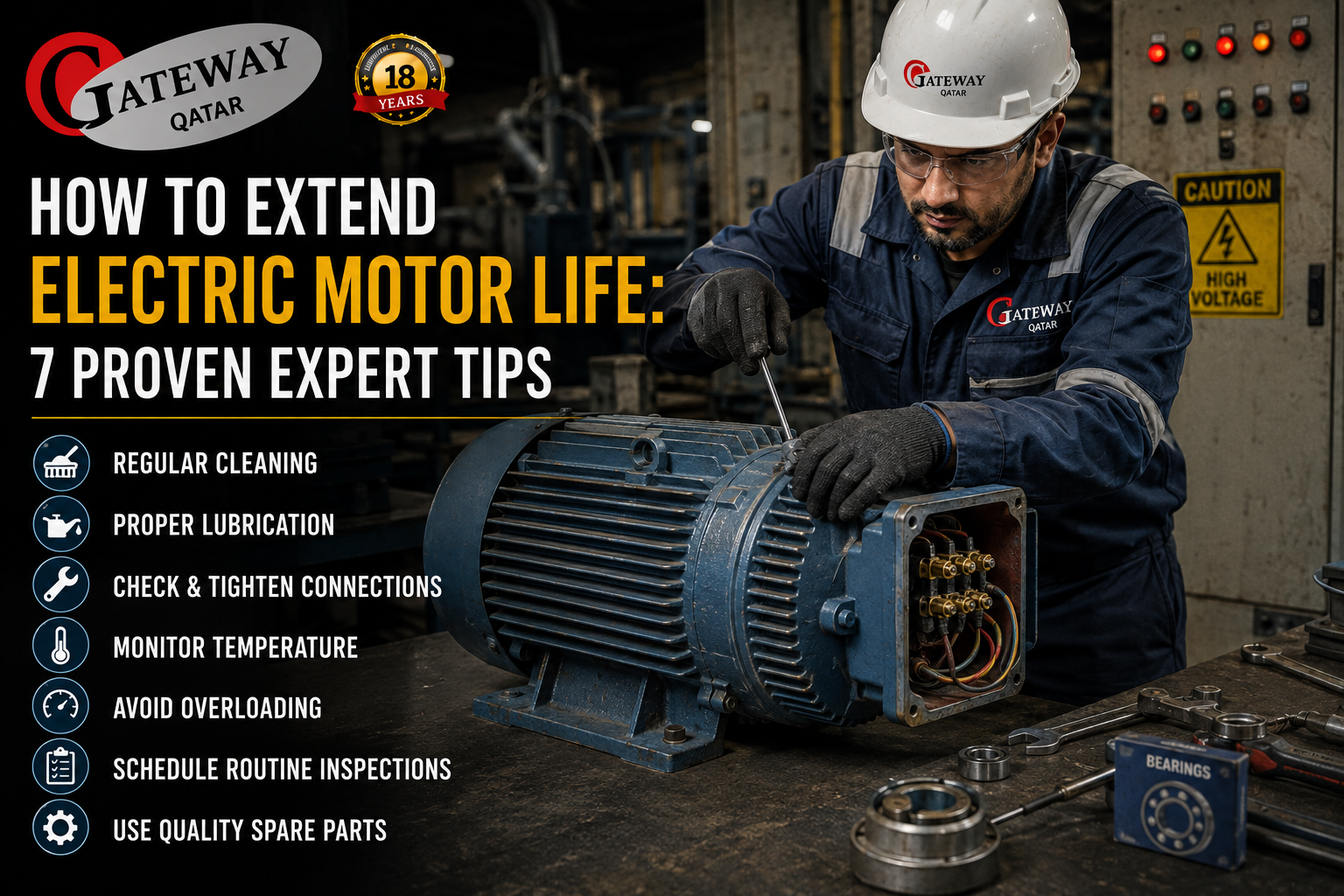
How to Extend Electric Motor Life: 7 Proven Expert Tips
Understanding how to extend electric motor life is one of the most valuable pieces of knowledge any facility manager, maintenance engineer, or operations director can possess. Electric motors are the mechanical backbone of virtually every industrial, commercial, and building services operation — and the difference between a motor that fails within two or three years and one that runs reliably for fifteen or twenty years is almost never down to luck. It is almost always the direct result of how well or how poorly the motor has been maintained, installed, operated, and monitored throughout its service life.
The financial stakes of knowing how to extend electric motor life are substantial. Every unexpected motor failure carries direct costs — the rewinding or replacement cost itself, emergency labour charges, lost production or operational downtime, and the management time consumed by an avoidable crisis. In demanding operating environments like Doha and the wider Gulf region — where extreme heat, high humidity, continuous year-round duty cycles, and dust exposure from sandstorms place motors under far greater stress than in more temperate climates — knowing how to extend electric motor life is even more financially critical than in less demanding environments.
Gateway Technologies — the dedicated Motor Rewinding and Pump Repair Division of Gateway Qatar, providing expert motor services across Doha and Qatar since 2004 — shares 7 proven expert tips on how to extend electric motor life that every maintenance team should implement immediately.
Tip 1: Get the Installation Right From Day One
The first step in how to extend electric motor life is ensuring that the motor is correctly installed from the very first day of operation — because installation errors create conditions that relentlessly damage the motor from the moment it is started, shortening its service life regardless of how well it is maintained afterwards.
The installation factors that most significantly impact how to extend electric motor life include:
- Precision shaft alignment — misalignment between the motor shaft and the driven equipment coupling is one of the leading causes of premature bearing failure and shaft fatigue. Precision laser alignment at installation is one of the most cost-effective investments in how to extend electric motor life available to any maintenance team
- Correct mounting and base preparation — a motor mounted on a poorly prepared, uneven, or flexible base generates vibration that stresses bearings, windings, and mechanical connections. Solid, level mounting is a fundamental requirement for how to extend electric motor life
- Correct belt tension for belt-driven applications — overtight belts generate excessive radial bearing loads that dramatically shorten bearing life. Correct belt tension set at installation — and checked at regular maintenance intervals — is a critical element of how to extend electric motor life in fan and pump drive applications
- Adequate ventilation around the motor — a motor installed in a confined, poorly ventilated location will run significantly hotter than its design intends. Ensuring adequate cooling airflow around every motor is one of the simplest and most overlooked aspects of how to extend electric motor life
For guidance on the installation standards that provide the foundation for maximum motor service life, our detailed guide on signs your electric motor needs rewinding explains how poor installation manifests as early motor failure symptoms.
Tip 2: Implement a Regular Lubrication Programme
The second tip in how to extend electric motor life is establishing and rigorously following a regular, correctly specified lubrication programme for every motor with grease-lubricated bearings. Bearing failure accounts for approximately 40-50% of all electric motor failures in industrial service — and the majority of those bearing failures are directly attributable to incorrect or neglected lubrication rather than any fundamental deficiency in the bearing or motor design.
A professional lubrication programme as part of how to extend electric motor life includes:
- Correct grease specification — using the right grease type and grade for the motor’s operating speed, temperature, and bearing type is fundamental. Mixing incompatible greases from different manufacturers or specification classes causes rapid bearing deterioration, directly negating the intended benefit of lubrication as a strategy for how to extend electric motor life
- Correct lubrication quantity — over-lubrication is just as damaging as under-lubrication. Excess grease generates heat through churning, raises bearing operating temperature, and can contaminate motor windings — all of which undermine the goal of how to extend electric motor life
- Correct lubrication interval — the frequency of relubrication depends on the motor’s operating speed, ambient temperature, and duty cycle. In Qatar’s hot environment where motors run year-round at elevated temperatures, lubrication intervals should be shorter than the manufacturer’s standard guidelines to effectively achieve how to extend electric motor life in this specific operating context
Tip 3: Monitor Winding Insulation Resistance Regularly
The third expert tip on how to extend electric motor life is implementing regular insulation resistance monitoring using a calibrated megohmmeter — a simple, inexpensive electrical test that provides objective, measurable data on the health of the motor winding insulation and is the single most powerful predictive tool available for how to extend electric motor life in practice.
Insulation resistance monitoring enables how to extend electric motor life by:
- Identifying moisture ingress before it causes failure — regular insulation resistance testing detects the moisture absorption that is one of the most common early-stage winding failure precursors, allowing drying and varnish treatment to restore insulation condition before the damage becomes irreversible
- Tracking the trend of insulation deterioration — a single insulation resistance reading tells you where you are. A series of readings taken at regular intervals shows you where you are going — and whether a motor is deteriorating rapidly enough to schedule rewinding before failure or slowly enough to continue monitoring
- Providing the objective data for maintenance planning — knowing the actual insulation resistance values of every motor in a facility transforms how to extend electric motor life from a reactive aspiration into a proactive, data-driven programme
In Qatar’s coastal areas where humidity creates particular challenges for motor winding insulation, regular megohmmeter testing is especially valuable as a core element of how to extend electric motor life. For more on what declining insulation values indicate, our guide on why do electric motors fail explains the insulation breakdown mechanism in detail.
Tip 4: Keep Motors Clean and Ventilation Passages Clear
The fourth tip on how to extend electric motor life is maintaining motor cleanliness and ensuring ventilation passages remain clear — a basic but critically important maintenance practice whose neglect is responsible for a surprising proportion of premature motor failures across industrial and commercial facilities everywhere.
How cleanliness contributes to how to extend electric motor life:
- Dust accumulation reduces cooling effectiveness — accumulated dust on motor surfaces and inside ventilation passages acts as thermal insulation, preventing the heat generated by winding losses and friction from dissipating into the surrounding air as the motor is designed to do. Every degree of additional winding temperature caused by poor cooling reduces insulation life according to the Arrhenius relationship — making dust removal a direct and measurable strategy for how to extend electric motor life
- Contamination of windings accelerates insulation breakdown — conductive dust particles that penetrate into motor windings can create partial discharge paths that gradually erode insulation, dramatically shortening winding life. Keeping motor enclosures clean and intact is therefore a fundamental element of how to extend electric motor life in dusty environments
- Particular importance in Qatar’s sandstorm environment — in Doha and across Qatar, the frequent sandstorm events that deposit significant quantities of fine particulate across the entire built environment make motor cleaning one of the most locally important strategies for how to extend electric motor life — significantly more important than in cleaner industrial environments
Tip 5: Verify Power Supply Quality
The fifth expert tip on how to extend electric motor life is verifying and where necessary improving the quality of the electrical power supply to every motor in the facility. Poor power supply quality is one of the most commonly overlooked contributors to premature motor failure — and one of the most significant, because its effects are insidious, progressive, and invisible without the right monitoring equipment.
Power supply factors that undermine how to extend electric motor life include:
- Voltage imbalance between phases — even a 3.5% voltage imbalance between phases in a three-phase supply causes approximately 25% additional current in the most heavily loaded phase and a corresponding increase in winding temperature that directly shortens insulation life. Correcting voltage imbalance is one of the highest-impact strategies for how to extend electric motor life in three-phase motor applications
- Sustained undervoltage — a motor operating at 10% below rated voltage draws approximately 10-12% more current than rated to maintain the same torque output, generating additional heat that accelerates insulation ageing and undermines how to extend electric motor life
- Harmonic distortion from non-linear loads — power electronic equipment including variable frequency drives, LED lighting systems, and UPS units generates harmonic currents that create additional heating in motor windings beyond what the fundamental frequency current alone would produce
According to the American Society of Civil Engineers (ASCE), power supply quality verification and correction consistently ranks among the highest-return investments available in any comprehensive electric motor life extension programme — delivering measurable improvements in motor reliability and service life at relatively low implementation cost.
Tip 6: Size Motors Correctly for the Actual Application Load
The sixth tip on how to extend electric motor life is ensuring that every motor is correctly sized for the actual load it drives — operating in the 75-100% loading range that maximises both efficiency and thermal stability rather than chronically overloaded or excessively underloaded relative to its rated capacity.
How correct sizing contributes to how to extend electric motor life:
- Avoid chronic overloading — a motor continuously operating above its rated current will run hotter than its insulation class is designed to tolerate, progressively degrading insulation life. Correcting chronic overload — through load reduction, drive system optimisation, or motor resizing — is a fundamental element of how to extend electric motor life for any motor consistently operating above nameplate current
- Avoid extreme underloading — while less immediately damaging than overloading, a motor operating at less than 50% of rated load operates at reduced power factor and efficiency, and in some designs at elevated winding temperature relative to output — not the most effective implementation of how to extend electric motor life even if it appears safer than overloading
- Use variable frequency drives where loads vary — for pump and fan applications where the load varies significantly with operating conditions, fitting a variable frequency drive allows the motor to operate efficiently across the full range of actual demand rather than running at full speed against a throttled valve or damper, significantly extending motor and driven equipment life
Tip 7: Plan Rewinding Proactively, Not Reactively
The seventh and most strategically important tip on how to extend electric motor life is shifting the approach to motor rewinding from reactive — rewinding after complete failure — to proactive — rewinding based on condition monitoring data before failure occurs.
Why proactive rewinding is the best implementation of how to extend electric motor life:
- Planned rewinding prevents collateral damage — a motor that fails completely through winding burnout frequently damages the stator core through the heat and current surge of the failure event, potentially converting a straightforward rewinding job into a more complex and expensive repair. Planning rewinding before failure occurs — based on declining insulation resistance values or other condition indicators — eliminates this collateral damage risk
- Planned rewinding allows optimal timing — proactively scheduling motor rewinding during a planned maintenance shutdown or low-production period eliminates the operational disruption and emergency cost premium associated with reactive rewinding following unexpected motor failure
- Proactive rewinding extends total motor lifespan — a motor that is rewound before its insulation fails completely, with the stator core and mechanical components intact, will achieve a longer total accumulated service life than one that is allowed to fail catastrophically before rewinding is arranged
Gateway Technologies in Doha provides condition-based motor assessment services that give facility managers across Qatar the objective data they need to implement proactive rewinding as the cornerstone of their how to extend electric motor life programme. For more on our rewinding process and how it restores motors to full original performance, read our comprehensive guide on motor rewinding vs replacement — covering every factor that determines the right timing and approach for motor rewinding decisions.
According to the Qatar Chamber of Commerce, engaging properly licensed and qualified electrical engineering contractors for specialist motor services is essential for implementing an effective how to extend electric motor life programme across Qatar’s commercial and industrial sectors.
Gateway Technologies — Your Partner for Extending Electric Motor Life in Qatar
Gateway Technologies provides the complete range of motor services that support every element of how to extend electric motor life for facility managers and maintenance engineers across Doha and the whole of Qatar — from insulation resistance testing and condition assessment through precision rewinding, bearing replacement, shaft alignment, and detailed maintenance reporting.
Our motor life extension services include:
- ✅ Insulation resistance testing and trend analysis
- ✅ Precision motor rewinding with quality-grade copper materials
- ✅ Bearing replacement with correctly specified components
- ✅ Shaft alignment verification and correction
- ✅ Motor condition assessment and maintenance planning
- ✅ Written test certificates and maintenance reports
- ✅ Service across Doha and the whole of Qatar
Contact Gateway Technologies
Ready to implement a professional how to extend electric motor life programme for your facility? Contact Gateway Technologies today for expert advice and motor services anywhere across Qatar.
📞 WhatsApp: 557 50173
✉️ Email: [email protected] / [email protected]
📋 Get a Free Quote: Contact Gateway Qatar today
📍 Workshop: Opposite Aspire Park, Mauither, Doha, Qatar
Frequently Asked Questions
What is the most important single factor in how to extend electric motor life?
Winding insulation protection is the single most important factor in how to extend electric motor life — because winding insulation failure accounts for the majority of electric motor failures in service. Everything from correct installation and proper lubrication to cleanliness, correct loading, and good power supply quality contributes to protecting winding insulation and therefore to how to extend electric motor life in practice
How does the hot climate in Qatar affect how to extend electric motor life?
Qatar’s extreme ambient temperatures exceeding 45°C, combined with continuous year-round operation, high humidity, and dust exposure, create conditions that accelerate motor winding insulation degradation at rates far exceeding temperate climate norms. Implementing all seven tips on how to extend electric motor life described in this guide is therefore even more important in Qatar than in more moderate environments.
How often should insulation resistance testing be carried out as part of how to extend electric motor life?
For motors in continuous or near-continuous operation in demanding environments like Qatar, insulation resistance testing should be carried out at every scheduled maintenance visit — typically every three to six months for critical motors. The most valuable output is the trend over time rather than any single reading, making regular testing at consistent intervals the key to implementing insulation monitoring effectively as part of how to extend electric motor life.
Does correct motor sizing really make a significant difference to how to extend electric motor life?
Yes — a motor chronically operating above its rated current will run at winding temperatures above its insulation class rating, halving insulation life for every 10°C of excess temperature. Conversely, a correctly loaded motor running at 75-100% of rated output operates within its thermal design limits, maximising the winding insulation life that is central to how to extend electric motor life in practice.
Does Gateway Technologies provide motor life extension services across all of Qatar?
Yes. Gateway Technologies provides motor rewinding, condition assessment, bearing replacement, and shaft alignment services across the whole of Qatar including Doha, Ar-Rayyan, Al Wakrah, Al Khor, Mesaieed Industrial City, and all surrounding areas. Contact us via WhatsApp on 557 50173 to discuss a motor life extension programme for your facility today.